Why we invested in Flok Health
By Leigh Brody, Investor, AlbionVC
Posted
Healthcare systems across the world are trapped in a painful trade-off. Scale comes at the expense of quality. Access comes at the expense of personalisation. And in many areas of care, demand is growing faster than the workforce can realistically support.
Physiotherapy sits at the centre of this problem. Demand for rehabilitation and movement-based care continues to rise globally, driven by ageing populations, chronic disease, post-operative recovery, injury, and increasingly sedentary lifestyles. Yet access remains fundamentally constrained by clinician availability. Patients wait months for appointments, engagement drops between sessions, and care delivery remains heavily tied to one-to-one interactions that are difficult to scale.
We believe the next generation of healthcare companies will not simply digitise existing pathways. They will fundamentally redesign how care is delivered.
That is why we are excited to announce our investment in Flok.
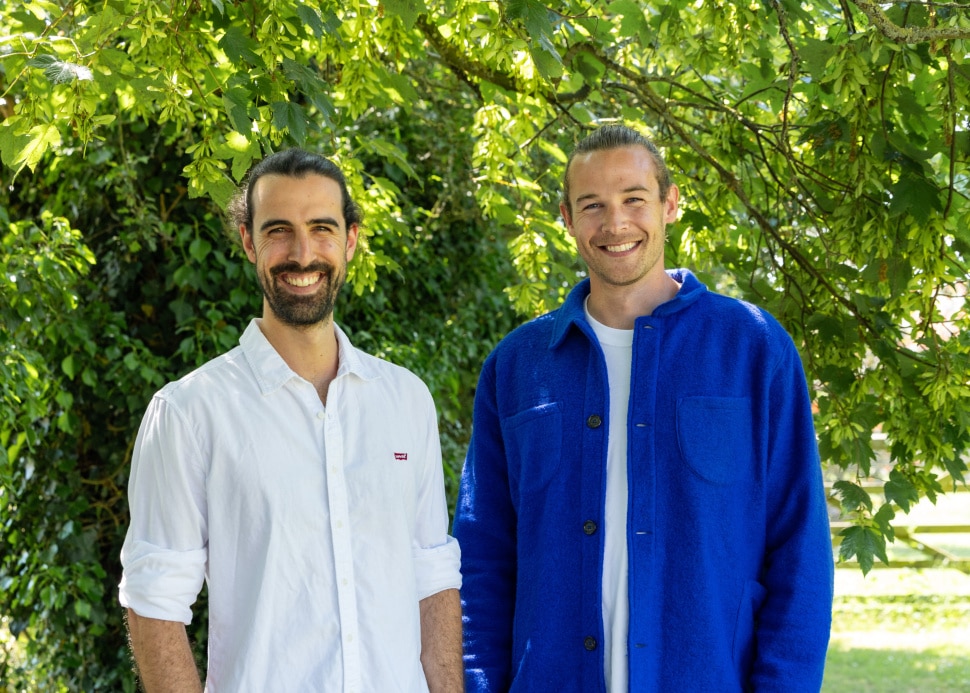
Founded by Finn Stevenson and Ricardo da Silva, Flok Health is building the world’s first AI-native physiotherapy clinic. It’s a fully integrated platform that combines autonomous AI systems with human clinical oversight to deliver personalised rehabilitation and physiotherapy care at a population scale.
At AlbionVC, we have spent years backing companies that reshape healthcare delivery through technology. What stood out immediately with Flok was not just the ambition of the vision, but the depth of execution already achieved.
Building regulated infrastructure
Most healthcare AI companies today focus on workflow tools, copilots, or administrative efficiency. Flok is taking on a harder challenge: delivering regulated clinical care directly to patients.
The team has done the deep work of building a regulated healthcare provider, with a CQC-approved service model and a Class IIa medical device capable of autonomously assessing and treating back pain.
They have the technical capability, clinical governance, and regulatory infrastructure that often creates a massive barrier for entry to healthtech startups. This is not an AI layer bolted onto a service; its a clinical system built from the ground up for the AI-era.
Importantly, the company has approached AI in healthcare the right way: not as a replacement for clinicians, but as a way to dramatically expand access to high-quality care while maintaining safety and oversight.
Patients receive personalised treatment pathways, ongoing adaptive support, and same-day access to care through an experience designed around engagement and adherence rather than episodic appointments.In a healthcare system increasingly defined by workforce shortages and rising demand, that matters enormously.
Why AI-native physiotherapy?
Physiotherapy is one of the largest and most operationally constrained areas in healthcare.
It is also uniquely suited for autonomous systems. Many physiotherapy pathways follow structured behavioural and movement-based interventions where consistency, repetition, and adherence are critical to outcomes.
High-quality patient outcomes depend on continuous coaching, regular reinforcement, and adaptive guidance between sessions – something that traditional models struggle to maintain due to workforce capacity.
Flok’s model changes the economics of care delivery. It is one of the clearest examples of how AI can create genuine structural improvements in healthcare delivery.
By turning rehabilitation and physiotherapy into a scalable AI-enabled service capable of delivering continuous, personalised support whenever and wherever patients need it, they unlock profound benefits:
- For patients, it means immediate access, more frequent support, and better continuity of care.
- For healthcare systems, it means reduced backlogs, improved operational efficiency, and the ability to redirect scarce clinical capacity toward higher-acuity patients.
- For clinicians, it creates the opportunity to operate at the top of their licence rather than spending time on repetitive, low-complexity interventions.
A team with unusual founder-market fit
At AlbionVC, we are drawn to founders who possess a deep understanding of the systems they are trying to change.
Finn brings clinical and musculoskeletal expertise with firsthand experience of the limitations of traditional care delivery. Ric provides the exceptional technical depth and systems thinking required to operationalise AI safely within regulated healthcare environments.
Together, they have built a team that understands how to navigate the realities of healthcare procurement, regulation, clinical governance, and patient engagement.
Healthcare is full of technically impressive products that struggle to achieve adoption because they fail to integrate into real clinical systems. The team’s demonstrated ability to deploy safely at scale within NHS organisations, and generate meaningful patient outcomes is a testament to their execution capability.
Why now
We are entering a transition in healthcare similar to the shift that cloud software triggered across enterprise infrastructure two decades ago.
Historically, healthcare systems have been forced to ration access to high-quality care due to scarce human capacity. AI removes that ceiling. For the first time, it becomes possible to deliver highly personalised, responsive healthcare experiences at scale.
The external environment is increasingly supportive. Health systems are actively searching for scalable solutions to workforce shortages and growing demand; regulators are becoming more sophisticated around AI-enabled care models; and patients increasingly expect healthcare experiences that match the accessibility and responsiveness they receive in every other part of modern life. Flok sits at the center of these converging trends.
Looking ahead
Physiotherapy is just the beginning. It represents one of the clearest and most immediate opportunities for AI-native healthcare delivery. Its combination of measurable outcomes, structured care pathways, and a global shortage of clinical capacity makes it suitable for intelligent, autonomous systems that can augment and extend human clinicians.
As autonomous clinical systems mature, we expect to see entirely new healthcare delivery models emerge – models that increase access, improve outcomes, and fundamentally alter the cost structure of care. That’s what makes Flok so compelling.
We are thrilled to be partnering with Finn, Ric, and the entire Flok team as they build the future of scalable, personalised healthcare.Healthcare without compromise is an ambitious mission but the team has the potential to make it real.
The Times has more here.
Related content
geoSurge launches free app showing brands how they rank in ChatGPT, Claude and Gemini
The app tracks AI visibility and share of voice by topic, country and model, running on the AI plan brands already pay for.